One Leader Who Owns the Whole Revenue Engine
When Marketing, Sales, and Customer Success are telling 3 different stories, the problem isn't any one of them. It's the absence of someone who owns all 3. Veritac Group's fractional CROs are former revenue leaders who have unified the full commercial system at PE-backed companies and built the infrastructure to prove it's working.

PE Firms









.png?width=128&height=38&name=trans%20light%20logo%20(1).png)
.png?width=96&height=38&name=trans%20light%20logo%20(2).png)


A Single-Leader Accountable to the Full Revenue Number
A fractional CRO (Chief Revenue Officer) owns the complete revenue system, marketing, sales, and customer success, under unified leadership, on a defined engagement basis. They set the strategy, align the functions, build the infrastructure, and are personally accountable to the total revenue outcome.
-
The Fractional CRO Model
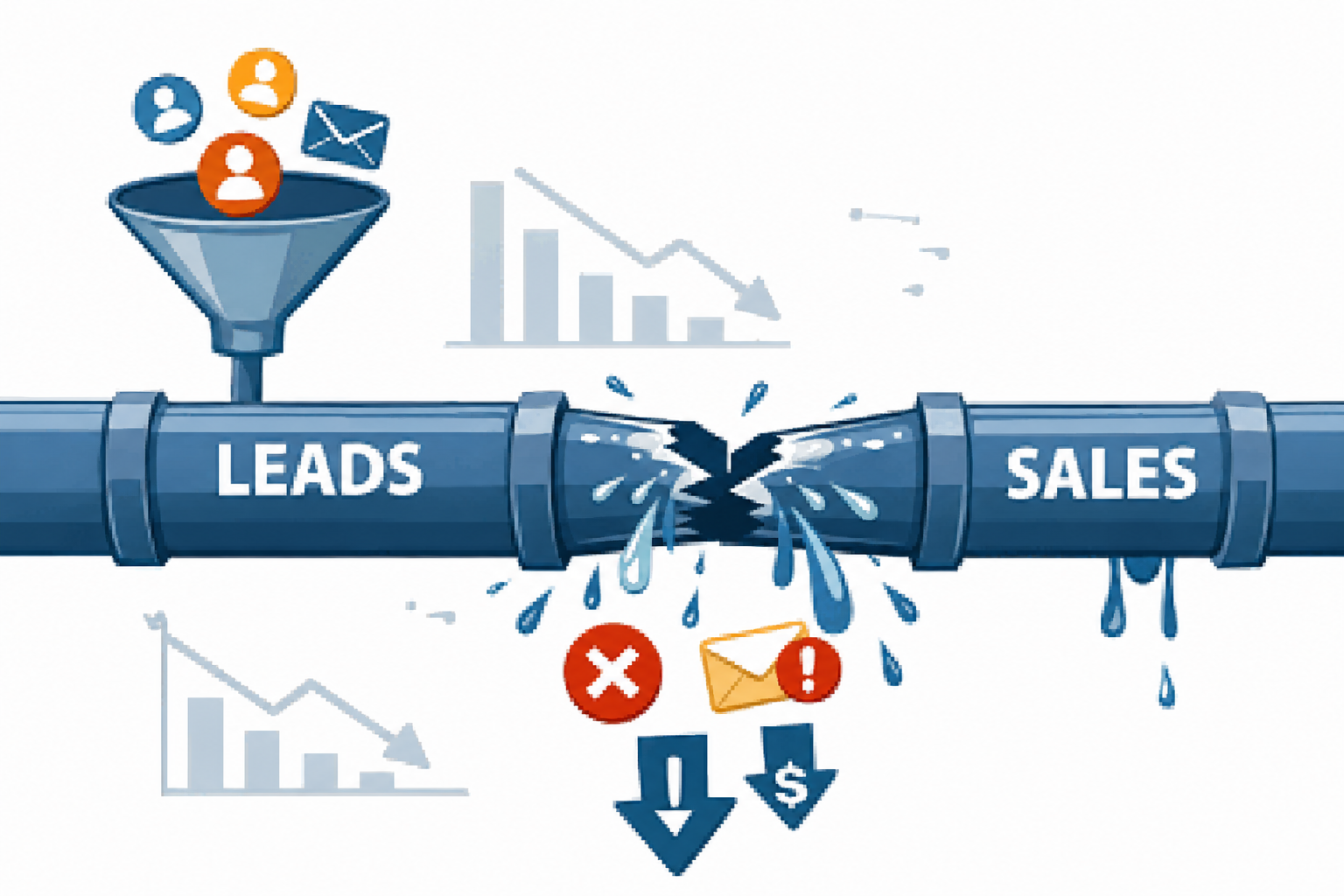
The CRO role was invented to solve a specific problem: companies where marketing, sales, and customer success all report strong individual metrics, but collective revenue performance consistently misses. Each function optimizes for its own number. Nobody owns the handoffs between them. The result is a system that leaks revenue at every seam, i.e., MQLs that don't convert, deals that close but churn, and expansion opportunities that nobody tracks.
A fractional CRO closes that loop. They sit above all three functions, set shared definitions and shared metrics, build the connective tissue between teams, and hold the whole system accountable to a single number: total revenue.
Veritac Group's fractional CROs are former operators who have held the seat. They have built and led revenue organizations that span marketing, sales, and CS - not just one function. They understand the board cadence, the PE reporting cycle, and the pressure of owning a number in a leveraged hold. That experience is not transferable from a playbook or a certification.
The engagement model is build-to-transfer. When our fractional CRO leaves, the revenue system runs without them. That is the measure of a successful engagement, not just the quality of the final presentation and its implementation.
8 Signs Your Company Needs a Fractional CRO
A fractional CRO is the right answer when the revenue problem is systemic and not isolated to one function. These are signals that point to a unified revenue leadership gap.
Missed Forecasts
Marketing reports strong pipeline. Sales reports poor lead quality. Customer success reports healthy NPS. And yet revenue misses quarter after quarter.
No One in CRO Role
Your CRO role is open, or has never existed, and unified revenue leadership is missing from the org chart completely.
Confusing Metrics
New customer acquisition is growing but net revenue is declining, and no single leader owns the connection between the two.
"One Throat to Choke"
Your PE board or investors are asking for a single point of accountability on the revenue number, and no one currently fills that role.
Finger-Pointing Between Sales and Marketing
Marketing and Sales are using different definitions of a qualified lead, different pipeline metrics, and different interpretations of what "good" looks like.
Sustainable Growth Engine
You are preparing for exit and the revenue engine needs to look unified, systematic, and scalable, and not a collection of disconnected functions that work because of individual relationships.
Automation & KPIs
Your tech stack makes it difficult to retrieve KPI data in order to be able to pivot in the market, automate, and add AI acceleration
Revenue Engine Complexity
Layers of integration have added complexity to your growth system. Growth is plateauing and the root cause spans multiple revenue functions, no single CMO, CSO, or VP can fix it from inside their own lane.
Fractional CRO vs. Individual Fractional Executives vs. Full-Time Hire
Companies evaluating a fractional CRO often consider bringing in a fractional CRO and a fractional VP Sales separately, or waiting for a full-time CRO search. Here is how those options compare at the level that matters: unified ownership of the revenue number.
| Dimension | Veritac Fractional CRO | Fractional CMO and Fractional CSO Separately | Revenue Consultant | Full-Time CRO |
| Single Revenue Accountability? | ✅One leader, one number | ❌ Two leaders, coordination risk | ❌Recommendations only | ✅but 6-month search plus ramp |
| Owns all 3 Revenue Functions? | ✅Sales, Marketing, and CS (if applicable) | Split ownership; CS often excluded | ❌Advisory only | ✅ |
| Available Immediately | ✅Deploys in days or weeks | ❌Two searches, two onboarding timelines | ✅Generally, yes | ❌ 5-8 months typical |
| Fixes the Handoff between Functions? | ✅Core focus: MQL > SQL > NRR loop | Depends on coordination between the two leaders | Rarely - usually a one function focus | ✅If hire is strong |
| PE-fluent? | ✅PE hold periods, board cadence, EBITDA lens | Varies - two different backgrounds | Varies widely | Varies by candidate |
| Builds Systems You Keep? | ✅Build-to-transfer model | Risk of two parallel systems | ❌Deliverable focused | ✅ |
The APRO™ Framework Applied to Revenue System Transformation
Veritac Group fractional CRO engagements follow the APRO™ Framework: structured to move from full-system diagnosis to cross-functional execution within a PE-calibrated timeline
Assess all 3 functions together: ICP accuracy, pipeline quality, MQL-to-closed-won conversion, NRR, churn patterns, CS commercial motion, shared definitions, CRM reliability, and cross-functional measurement gaps. The full picture, not function by function.
Days 1–21
Rank the highest-leverage interventions across all three functions. The sequence matters: fixing pip[eline quality before fixing velocity, fixing ICP before fixing alignment. Board-ready 90-day milestones with a single revenue metric all three functions are working toward.
Days 15–45
Lead marketing, sales, and CS toward shared definitions and shared accountability. Implement RevOps infrastructure. Build the pipeline process. Establish the customer success commercial motion. Fix the handoffs - MQL to SQL, closed-won to onboarding, onboarding to expansion.
Days 35–90+
Build the reporting framework that shows the board a single, coherent revenue picture: pipeline velocity, conversion, NRR, CAC/LTV, and forecast accuracy, all from one system, owned by one function.
Ongoing
What a Veritac Fractional CRO Engagement Produces
The measure of a successful CRO engagement is not a new org chart or a new set of metrics. It is a revenue system where marketing, sales, and customer success are pulling in the same direction, and the board can see it.
What a Veritac Fractional CRO Engagement Includes
Every engagement is scoped to your specific situation. These are the deliverables that most fractional CRO clients receive.
Revenue Systems Unification
One shared ICP. One shared definition of a qualified lead. One shared pipeline metric. One shared revenue number that marketing, sales, and customer service all move toward structurally, not culturally.
RevOps Infrastructure
CRM architecture, pipeline stage-gate discipline, demand gen systems, and customer success commercial motion are designed as one connected system vs. 3 separate stacks that don't talk to each other.
Unified Revenue Dashboard
A single, board-ready revenue report convering pipeline velocity, MQL-to-closed-won conversion, NRR, CAC/LTV, and forecast accuracy. The board sees the system, not 3 separate function updates.
ICP Definition and Expansion Signal
Built from closed-won and retention data. Identifies which customers close fast, retain well, and expand readily, and builds that pattern into targeting, onboarding, and CS workflow simultaneously.
Handoff Architecture
The MQL-to-SQL handoff. The closed-won-to-onboarding handoff. The onboarding-to-expansion motion. The three places revenue most commonly leaks, documented, implemented, and measured.
Forecast Accuracy and Exit Readiness
From direct integrations with card networks and banks to checkout flows in the browser, we operate on and optimize at every level of the financial stack.
What Our Clients Say
"Veritac Group gave us both a strategy and a seasoned leader who executed it. They helped us align sales and marketing, inprove lead quality, and double our growth rate."
“We were very fortunate to hire [fCRO] as the CRO of our [health tech company] while I was Board Chair. At the time, the company had a great product, but it was small in terms of revenue. [fCRO] built out the GTM function and started us on the path of rapid organic growth while also adding needed maturity and wisdom to the senior executive team. During his tenure, we also added two significant add-on integrations, and it would not have been as successful without his experience and guidance."
Need clarification?
What is a fractional CRO?
A fractional CRO (Chief Revenue Officer) is a senior marketing executive who owns the complete revenue system - marketing, sales, and customer success - for a company on a defined engagement basis. Unlike a fractional CMO or CSO who leads a single function, a fractional CRO unifies all three revenue functions under one strategic and operational leadership. The CRO role is the right answer when the problem is not in one function but in how all three connect and what happens at the handoffs between them.
When should a company hire a fractional CRO instead of a fractional CMO and CSO separately?
Hire a fractional CRO when the revenue problem is systemic, when marketing, sales, and customer success are all performing against their individual metrics but collective revenue performance is still missing. If the problem is clearly isolated to one function, a fractional CMO or CSO is typically most cost-effective. If the problem spans the handoffs between functions, a single CRO is the more efficient solution.
What does a Veritac fractional CRO do day-to-day?
A Veritac fractional CRO owns the revenue engine: defines the ICP from closed-won and retention data, aligns marketing and sales on shared pipeline definitions and metrics, builds the RevOps infrastructure, implements the sales process, establishes the customer success commercial motion, runs the cross-functional revenue review, and creates the unified reporting framework the board needs. They attend leadership team meetings, present to investors, and take personal accountability for the total revenue number.
How much does a fractional CRO cost compared to a full-time CRO hire?
A full-time CRO at a mid-market company typically costs the company $300,000 to $500,000 per year in base + bonus compensation, equity, and benefits and recruiting fees. A fractional CRO from Veritac Group is scoped to the specific engagement required - typically a fraction of that cost, with meaningful results in 90 to 120 days rather than the 6-month search plus 90-day ramp of a full-time hire. Contact us to discuss the scope and structure for your situation.